Geographic accessibility
Tijuana sits directly south of San Diego, making it one of the most accessible international destinations for patients in the western United States and Canada.
Educational Guide · 2026 Edition
Learn about procedures, recovery expectations, travel planning, patient safety considerations, and consultation pathways — a central educational hub within the OCC & Ariel Center Network.
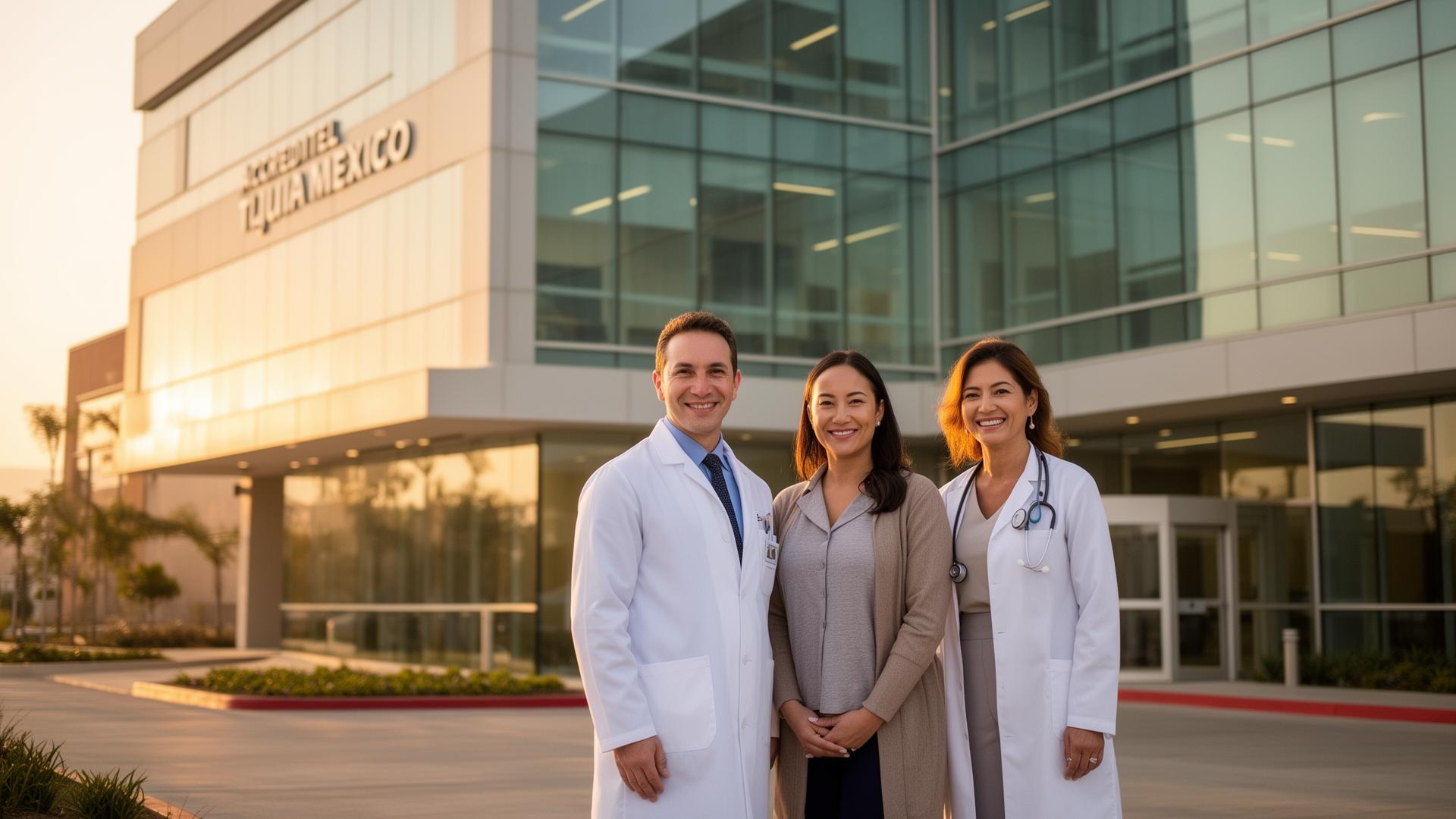
40–70%
Typical cost savings vs. US
20+ yrs
Tijuana surgical experience
15 min
Drive from San Diego Airport
Ownership disclosure: This educational guide is published by the team at Hospital Cyntar and The Ariel Center for Cosmetic Surgery in Tijuana, Mexico. It is not an independent, official, or neutral third-party publication.
Why cross-border
An educational discussion of factors international patients commonly weigh when researching plastic surgery options in Mexico. This is not a comparison with U.S. care, nor a claim of superiority — it is a summary of the practical and logistical considerations patients ask about most often.
Tijuana sits directly south of San Diego, making it one of the most accessible international destinations for patients in the western United States and Canada.
A short flight into San Diego followed by a 15-minute drive to the medical district replaces long-haul international travel for many patients exploring care abroad.
International patient programs commonly coordinate transportation, lodging, language support, scheduling, and pre- and post-operative communication in a single workflow.
Educational planning resources discuss inpatient recovery, monitored stays at recovery facilities or partner hotels, and structured timelines for returning home safely.
Patients are encouraged to review independent accreditations such as Joint Commission International (JCI) and Mexico's Consejo de Salubridad General when comparing facilities.
Bilingual coordinators, written information packets, and virtual consultation pathways help international patients ask informed questions before, during, and after care.
Cost overview
Educational price ranges only. Actual pricing depends on the individual case, technique, anesthesia, facility fees, and follow-up needs. Always request a written, all-inclusive quote.
Ranges are educational estimates and not a quote. Quotes require a consultation and individual medical evaluation.
Procedures
General overviews of the procedures US patients most frequently research. Each requires a personal consultation to determine candidacy.
Repositions underlying tissues and addresses excess skin in the mid-face, jawline, and neck. Techniques include traditional, deep-plane, and mini-lift.
Addresses excess abdominal skin and may include repair of separated abdominal muscles. Often researched after pregnancy or significant weight loss.
A larger contouring procedure that addresses excess skin around the abdomen, hips, back, and outer thighs — commonly considered after major weight loss.
Brachioplasty and thighplasty address loose skin on the upper arms and inner thighs, leaving scars in the surgical pathway.
Includes augmentation (implant or fat transfer), reduction, lift (mastopexy), and revision — each with distinct techniques and recovery.
A combination of body-contouring procedures performed during one surgical setting, commonly abdominoplasty with a breast procedure.
Research checklist
These are the topics most commonly evaluated when researching any plastic surgery provider — in the US or abroad. They are not endorsements of any particular facility.
Read the full checklistVerify accreditation status (JCI, Consejo de Salubridad General) directly with the certifying body.
Confirm board certification such as CMCPER in Mexico or the American Board of Plastic Surgery in the US.
Ask about the anesthesiologist, monitoring equipment, and protocols for managing complications.
Plan for length of stay, complication management, and local follow-up after returning home.
Safety first
Cross-border surgical care can be safe and high-quality when the right standards are in place. The same factors that define a safe provider in the US apply equally in Mexico — and they should be verified, not assumed.
Independent accreditations such as Joint Commission International (JCI) for hospitals, and specialty board certification for surgeons, provide externally verified standards for patient safety, infection control, and quality of care.
Cost savings are a real factor in cross-border care, but they should never come at the expense of accreditation, surgeon training, anesthesia standards, or aftercare. Lower price alone is not an indicator of safe surgery.
Evaluate the hospital, the surgeon, the anesthesia team, the recovery environment, and the city itself. Look for transparent information, verifiable credentials, and a clear plan for both surgical and post-operative care.
Research framework
Use these four factors as a baseline checklist when evaluating any plastic or cosmetic surgery provider — at home or abroad.
Confirm whether the hospital holds current accreditation from a recognized body such as Joint Commission International (JCI) or Mexico's Consejo de Salubridad General. Verify status directly with the certifying organization.
Look for board certification (e.g., CMCPER in Mexico, ABPS in the US), specialty training in plastic surgery, hospital privileges, and documented experience with the specific procedure being considered.
Safe cross-border care includes a clear post-operative plan: in-person monitoring before travel home, virtual follow-ups with the surgical team, and coordination with a local provider for evaluation if concerns arise.
Reputable providers offer written, itemized, all-inclusive quotes and a clearly stated policy for how complications, revisions, and unplanned care are handled — including financial responsibility.
Our facility
This section is published directly by our team. It is provided for transparency and educational reference — not as an independent third-party evaluation.
Patients are encouraged to independently verify current accreditation status (e.g., JCI) with the certifying body.


Patient journey
A general educational overview of how a cross-border surgical journey is typically organized. Specific protocols vary by procedure and surgeon.
Review educational information, send a general inquiry, and exchange initial medical history with the team.
Discuss goals, candidacy, and procedure options with the surgical team. Pre-operative testing is reviewed.
Coordinated border crossing or short flight to San Diego, pre-op evaluation, and surgery at the facility.
Monitored recovery in Tijuana, then a return-home plan with guidance for local follow-up.
Candidacy
Not every patient is a candidate for elective plastic surgery, and ethical providers will recommend against a procedure when risk outweighs likely benefit. The following are general educational categories — individual candidacy is determined by a qualified surgeon after a full medical evaluation.
Uncontrolled high blood pressure or diabetes, clotting or bleeding disorders, active infection, recent cardiac or pulmonary events, or conditions that affect wound healing may delay or prevent elective surgery until they are stabilized.
Active smoking or nicotine use, current substance use disorders, and a BMI outside a safe surgical range for the planned procedure increase risk meaningfully. Smoking cessation, weight stabilization, and substance recovery support better outcomes.
Unrealistic expectations, untreated body image concerns, decisions made under significant emotional pressure, or active mental health crises generally warrant additional support before surgery is appropriate.
Some patients benefit from clearance by a primary care physician, cardiologist, endocrinologist, or mental health professional before proceeding. Reasonable alternatives — non-surgical options or deferring surgery — should always be on the table.
Consultation roadmap
A consultation is a structured conversation, not a sales meeting. The goal is to understand your health, your goals, the realistic options, and the risks — and to give you the information you need to make an informed decision.
Past surgeries, current medications, allergies, chronic conditions, family history, and prior anesthesia experiences are reviewed to identify factors that affect safety and planning.
A focused examination of the area of interest — skin quality, tissue thickness, symmetry, and underlying anatomy — informs which techniques are realistic and what outcomes can reasonably be discussed.
Pre-operative labs, EKG, imaging, or specialist clearance may be requested depending on the procedure, age, and health history. Testing supports anesthesia safety and surgical planning.
A clear, written description of your goals — and what would feel like a meaningful improvement — helps align the plan. The surgeon should also describe what cannot be achieved with the technique under discussion.
A transparent discussion of common and less common risks, anesthesia considerations, recovery challenges, and the variability of outcomes is part of every appropriate consultation.
The recommended approach is presented alongside reasonable alternatives — including non-surgical options or no treatment — so the decision rests on informed comparison rather than a single recommendation.
Alternatives
Plastic surgery is one option among several. Each alternative has its own benefits, limitations, and risks, and may be more appropriate depending on the goal, the anatomy, and individual health. None of the options below is presented as superior to another — each is a different tool.
Diet, structured exercise, physical therapy, sleep, and management of underlying conditions can meaningfully change appearance and function over time. Benefits: low risk, long-term health gains. Limitations: slower change, limited effect on excess skin or surgical anatomy.
Supervised medical programs, including GLP-1 medications when appropriate, can address weight as a separate question before considering body contouring. Benefits: addresses underlying weight; supports surgical safety. Limitations: ongoing therapy, medication side effects, may leave loose skin.
Botulinum toxin, fillers, biostimulators, radiofrequency, and laser-based skin treatments can refresh appearance or improve skin quality without surgery. Benefits: little or no downtime, lower upfront cost per session. Limitations: temporary effect, repeat sessions, limited for advanced changes.
Thread lifts, small-volume liposuction, or in-office tissue tightening sit between non-surgical and surgical options. Benefits: smaller incisions, shorter recovery. Limitations: more limited results, may still require surgery later.
Surgery addresses excess skin, repositions tissue, and creates structural change that other options cannot. Benefits: durable, predictable structural change. Limitations: anesthesia and surgical risks, scarring, longer recovery, higher upfront cost.
Choosing not to pursue any procedure is always a reasonable option. Benefits: no surgical risk, no cost, time to reconsider. Limitations: existing concerns remain unchanged. This option should be openly discussed in every appropriate consultation.
Recovery timeline
A general educational timeline for elective plastic surgery recovery. Individual timing varies by procedure, technique, anesthesia, and personal healing. The surgical team provides specific guidance for your case.
Monitored recovery at the facility or recovery suite. Pain management, vital sign monitoring, hydration, and assistance with mobility. Early ambulation when cleared reduces clotting risk.
Most patients remain locally for monitored recovery and the first post-operative evaluation. Swelling and bruising are usually most pronounced. Drains, garments, and activity restrictions are reviewed with the team.
Many patients are cleared to travel home after a post-operative evaluation. Light, non-strenuous activity is gradually resumed. Driving, lifting, and exercise remain restricted per the surgical plan.
Most patients return to desk work and routine daily activities. Significant swelling continues to decrease. Higher-impact exercise typically remains restricted; specific clearance is procedure-dependent.
Most patients have returned to full activity, including exercise, with team clearance. Swelling continues to refine. Scars are still maturing and typically appear pink or red during this phase.
Final swelling resolution and scar maturation. Tissues continue to soften and settle. A long-term follow-up visit (virtual or in person) allows the team to review final results and answer remaining questions.
Physician perspective
"One of the most common misconceptions patients have is…" …that surgery alone will resolve concerns rooted in weight, lifestyle, or unaddressed expectations. Surgery is most useful when it addresses an anatomic question that cannot be resolved any other way — and when the patient has a clear, realistic understanding of what it will and will not change.
"Patients frequently ask whether traveling for surgery is riskier." The honest answer is that risk depends on the specific facility, surgeon, anesthesia team, and aftercare plan — not the geography. A well-coordinated cross-border plan with accredited facilities and structured follow-up can be as safe as care at home; an under-resourced plan in any country is not.
"The question we wish more patients asked is…" …what happens if something doesn't go as expected. A clear written plan for complications, revisions, and after-care responsibility is one of the strongest indicators that you are working with a serious team.
Educational commentary from the Hospital Cyntar / Ariel Center clinical team. Does not constitute medical advice; a personal consultation is required for individual recommendations.
Program criteria
Objective criteria that international patients commonly weigh when comparing programs. These are factors, not promises — the right choice depends on your individual case.
Decades of cross-border patient coordination and documented case volume for the procedures discussed on this site.
Care delivered at a JCI-accredited private hospital with verifiable standards for patient safety and quality.
Bilingual educational resources, written information packets, and a consultation process focused on informed decision-making.
Monitored recovery before travel home, virtual follow-ups with the surgical team, and coordination with local providers.
Board-certified surgeons, qualified anesthesia team, nursing staff, and bilingual patient coordinators working together.
Operating rooms equipped for general and specialty plastic surgery with current monitoring and safety equipment.
Bilingual coordinators assist with scheduling, transportation, lodging, language, and pre- and post-operative communication.
Written, itemized, all-inclusive quotes and a clearly stated policy for complications and revisions, available on request.
Related reading
Continue researching with these in-depth guides on procedure planning, considerations when researching providers, travel logistics, and the facility.
Strategic planning, evaluation criteria, and the international patient journey.
Read moreEducational overviews of commonly researched plastic surgery procedures.
Read moreTopics to evaluate when researching any plastic surgery provider — at home or abroad.
Read moreLogistics commonly considered by international patients traveling for medical care.
Read moreFrequently asked
Safety depends on the specific facility and surgical team — not the country. Meaningful safety indicators include hospital accreditation (such as JCI), board-certified plastic surgeons, qualified anesthesia teams, and a structured plan for follow-up care. These should be independently verified for any provider, anywhere.
Patients with uncontrolled chronic conditions (hypertension, diabetes, clotting disorders), active infections, untreated mental health conditions, BMI outside a safe range for the planned procedure, active smoking without willingness to stop, or unrealistic expectations may not be ideal candidates. A qualified surgeon makes the determination case-by-case after a full evaluation.
A typical initial consultation includes a medical history review, physical evaluation relevant to the area of interest, discussion of goals, review of pre-operative testing, an explanation of techniques and alternatives, a transparent discussion of risks, and an itemized written quote when appropriate. A virtual consultation may serve as a first step; an in-person evaluation is required before any procedure.
Depending on the goal, alternatives may include lifestyle modification, physical therapy, medical weight management (including GLP-1 medications), injectables, energy-based skin treatments, or no treatment at all. Each alternative has its own benefits, limitations, and risks, and is not a substitute for surgery when surgery is medically indicated.
All surgery carries risk. Common categories include bleeding, infection, scarring, delayed wound healing, fluid collection (seroma/hematoma), changes in sensation, anesthesia reactions, asymmetry, and outcomes that differ from expectations. Less common risks include blood clots (DVT/PE), need for revision surgery, and rare anesthesia-related events.
Most patients return to light activity within 1–2 weeks, resume desk work within 2–4 weeks, and reach near-final swelling resolution by 3–6 months. Final scar maturation and tissue settling continue for up to 12 months. Specific timelines vary by procedure and individual healing.
Air travel timing depends on the procedure and individual recovery. Considerations include swelling, risk of blood clots, and wound tension. The surgical team provides specific clearance — usually after a monitored recovery period and post-operative evaluation.
A safe cross-border plan includes monitored recovery before travel home, scheduled virtual follow-ups with the surgical team, and a relationship with a local provider at home who can evaluate the surgical site if questions arise. Reputable providers describe in writing how complications and revisions are managed.
All-inclusive pricing in Mexico is often 40–70% lower than equivalent US elective surgery costs. Lower price alone does not equal lower — or higher — quality. Compare on accreditation, surgeon credentials, anesthesia standards, facility, and aftercare, not price alone, and request an itemized written quote.
Confirm hospital accreditation directly with the certifying body (e.g., JCI). Confirm surgeon board certification with the relevant society (CMCPER in Mexico, ABPS in the US). Review training history, hospital privileges, and documented experience with the specific procedure being considered.
Combining procedures is possible but increases operative time, anesthesia exposure, and recovery burden. There is no fixed maximum — a qualified surgical team evaluates health history, BMI, planned techniques, and post-operative monitoring capacity to determine a safe combination case-by-case.
No reputable provider should guarantee specific surgical results. Outcomes depend on individual anatomy, technique, healing, and lifestyle factors. Any provider offering a guaranteed result is a warning sign.
Most surgical teams recommend a companion for the immediate post-operative period to assist with transportation, medication, hydration, and mobility. If a companion is not available, ask about recovery facility options that provide on-site support.
A virtual consultation is typically a scheduled video or phone discussion to review goals, medical history, and questions. Photos or imaging may be requested in advance. It is educational and does not replace an in-person evaluation, which is required before any procedure.
Reputable providers describe in writing how complications and revisions are managed and who covers associated costs. A safe plan includes virtual follow-up with the surgical team and an established relationship with a local provider who can examine the surgical site.
Joint Commission International (JCI) evaluates hospitals against international patient safety and quality standards. Patients can verify any hospital's current accreditation status on the JCI website.
Recommended stay varies — commonly several days for smaller procedures and up to about two weeks for larger procedures. The surgical team provides procedure-specific guidance based on the operation, anesthesia, and individual recovery.
US citizens generally need a valid passport book or passport card for re-entry to the US by land. Requirements can change — verify current rules with the US Department of State and CBP before travel.
Ask about board certification, hospital privileges, case volume for the specific procedure, anesthesia provider qualifications, complication management, revision policy, written quote inclusions, expected recovery, and how follow-up is handled once you return home.
This site is published by the team at Hospital Cyntar and The Ariel Center for Cosmetic Surgery in Tijuana. It is an educational resource, not an independent or neutral third-party publication.
Medical inquiries are handled by the Hospital Cyntar / Ariel Center patient coordination team and treated as confidential. Information shared during a consultation is used for medical evaluation. Review the privacy policy for details on how inquiry data is stored and used.
Risk awareness
All surgical procedures carry risk. The list below describes general categories of risk that patients should discuss in detail with a qualified surgeon during a personal consultation. Individual risk depends on health history, the specific procedure, anesthesia, and other factors.
Excessive intra-operative or post-operative bleeding may require additional intervention or transfusion.
Surgical-site infection is a known risk of any procedure and may require antibiotics or further treatment.
All incisions leave scars. Final appearance depends on technique, location, healing, and individual skin biology.
Reactions to anesthesia are uncommon but possible. A qualified anesthesia team and pre-operative evaluation reduce risk.
Some patients experience slower wound healing, fluid collection, or skin changes that may extend recovery.
Aesthetic results are subjective and vary individually. No reputable provider guarantees specific outcomes.
Some patients may consider a revision procedure to address asymmetry, scarring, or other concerns. Ask each provider how revisions are handled.
Travel planning
An educational overview of common logistics international patients ask about. Specific protocols and timing depend on the procedure and the surgical team's guidance.
Coordinated transport between San Diego and Tijuana is common; valid travel documents (passport book or card) are required.
San Diego International Airport (SAN) is approximately 15 minutes from the medical district by car.
Recovery hotels and partner accommodations are commonly used by international patients during the immediate post-operative period.
A travel companion is generally recommended. Mobility, medication management, and nutrition are part of recovery planning.
Plan for virtual follow-ups with the surgical team and a local provider at home who can evaluate the surgical site if concerns arise.
About our network
OCC & Ariel Center has served international patients for decades through specialized medical tourism programs and coordinated cross-border care pathways. This site is the network's central educational resource for plastic surgery topics; specialty topics live on dedicated network sites listed below.
Last reviewed: · Content is reviewed periodically by the Hospital Cyntar / Ariel Center editorial team for accuracy and clarity. It does not replace a medical consultation.
Focused patient education
Two specialized educational resources with deeper information on specific procedures. Some related educational resources share a publishing network; links are selected based on topic relevance.
Facial rejuvenation
Review deep plane facelift candidacy, technique, safety, recovery, scars, costs, and questions to ask your surgeon.
Explore facial rejuvenation educationBody contouring
Learn about tummy tuck, body lift, arm lift, thigh lift, and surgery after major weight loss.
Explore body contouring educationReferences
Educational content on this site references guidance from recognized medical organizations. These sources are provided so readers can review primary information directly. Citation does not imply endorsement by any organization.
https://www.plasticsurgery.org
https://www.isaps.org
https://www.abplasticsurgery.org
https://www.cmcper.com
https://www.jointcommissioninternational.org
https://www.who.int/health-topics/patient-safety
https://medlineplus.gov
https://wwwnc.cdc.gov/travel
Last reviewed: . Content is reviewed periodically by the Hospital Cyntar / Ariel Center editorial team. Educational only; not a substitute for individualized medical advice.
Care pathways
Start with a self-assessment and general education about procedures and outcomes.
Am I considering surgery? →
Gather health history, get preliminary records reviewed, and compare providers.
Prepare for your consultation →
Learn about the specific procedures, techniques, and recovery timelines.
Explore procedures →
Border crossing, lodging, recovery care, and return-travel planning.
Read the travel guide →
Authority & trust
Hospital Cyntar in Tijuana, Mexico, supports international patients through a structured program that combines hospital-based surgical care, board-certified plastic surgeons, and end-to-end coordination. Verifying credentials and accreditations directly with each certifying body is always recommended.
Dedicated bilingual coordinators guide patients from inquiry through follow-up, including documentation, scheduling, and pre-operative planning.
Decades of combined experience serving US and Canadian patients traveling to Tijuana for elective surgery, including border logistics and recovery stays.
Full-service hospital environment with operating suites, recovery rooms, in-house diagnostics, and on-site medical staff — not an outpatient clinic.
Hospital Cyntar maintains accreditations referenced internationally. Patients are encouraged to verify current Joint Commission International (JCI) and Global Healthcare Accreditation (GHA) status with each certifying body.
A single point of contact manages consultations, quotes, scheduling, pre-op instructions, and post-operative check-ins after you return home.
Coordinated airport pickup, border crossing assistance from San Diego, and transfers between hospital and recovery accommodations.
References to accreditations are factual and do not imply endorsement. Patients should verify current status with Joint Commission International (jointcommissioninternational.org) and Global Healthcare Accreditation (ghaccreditation.com).
We only publish patient stories with written consent. Until consented stories are available, we don't display any — protecting patient privacy is more important than filler content.
Surgical Review & Clinical Oversight
The educational content on this website is reviewed for medical accuracy, patient safety, readability, and consistency with accepted plastic surgery principles and current surgical standards.
Primary Reviewer
Board-Certified Plastic, Aesthetic & Reconstructive Surgeon
Dr. Juan Cuellar is a board-certified plastic surgeon specializing in aesthetic surgery, facial rejuvenation, reconstructive surgery, and post-weight-loss body contouring. He completed advanced training in Plastic, Aesthetic and Reconstructive Surgery at Hospital General Dr. Manuel Gea González and Universidad Nacional Autónoma de México (UNAM), with additional training in cosmetic, craniofacial, and microsurgical procedures. Dr. Cuellar serves as part of The Ariel Center and Obesity Control Center surgical team.
View full reviewer profile →All educational content is periodically reviewed to improve accuracy, clarity, patient understanding, and consistency with current medical knowledge.
Provided for educational purposes only. Does not constitute medical advice, diagnosis, treatment recommendations, or guarantees of outcome. Individual candidacy requires evaluation by a qualified plastic surgeon.
References & Clinical Guidelines
Content reviewed using guidance and educational resources from:
Last reviewed: October 2026
Inquiries are handled directly by the Hospital Cyntar and Ariel Center team. We respond with educational information only — a personal consultation is required to determine candidacy for any procedure.